forkspace(active)
Isolated local dev/test environments for multi-repo compose stacks.
Isolated local dev/test environments for multi-repo compose stacks.
Run parallel copies of the same compose stack side by side without fighting over ports, containers, and volumes. Wraps Docker Compose project namespacing in a CLI that makes isolated “lanes” a one-liner.
forkspace up dev
forkspace up test --fork agent-a
forkspace up test --fork agent-b
forkspace down test --fork agent-aGit worktrees give agents and branches isolated file trees, but they all share one machine: one port 3306, one MySQL data directory, one Docker network namespace. Two agents running tests against “the” local database corrupt each other’s feedback loops. Full per-workspace VMs solve this with a sledgehammer; most stacks just need their compose services forked.
forkspace is the lightweight middle: a workspace-level compose manager that lets you choose isolation per service — container, namespace, or shared — instead of duplicating everything or sharing everything.
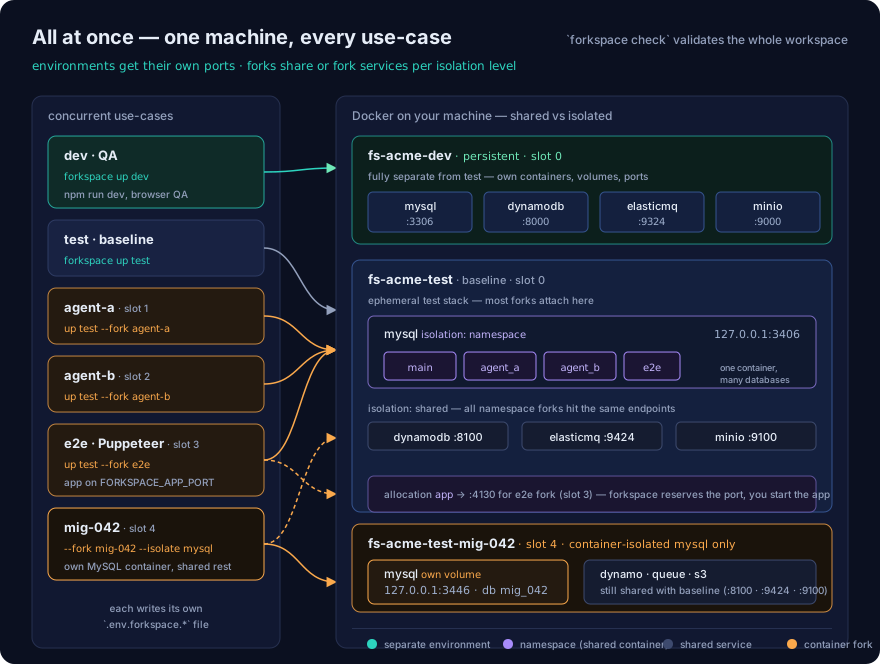
Dev, tests, agent forks, Puppeteer e2e, and a one-off migration can all run
concurrently. Each environment gets its own port range; within an environment,
forks share or fork individual services by isolation level — one MySQL can host
many namespace databases while DynamoDB stays shared, and --isolate mysql
spins up a separate container only for the fork that needs it.
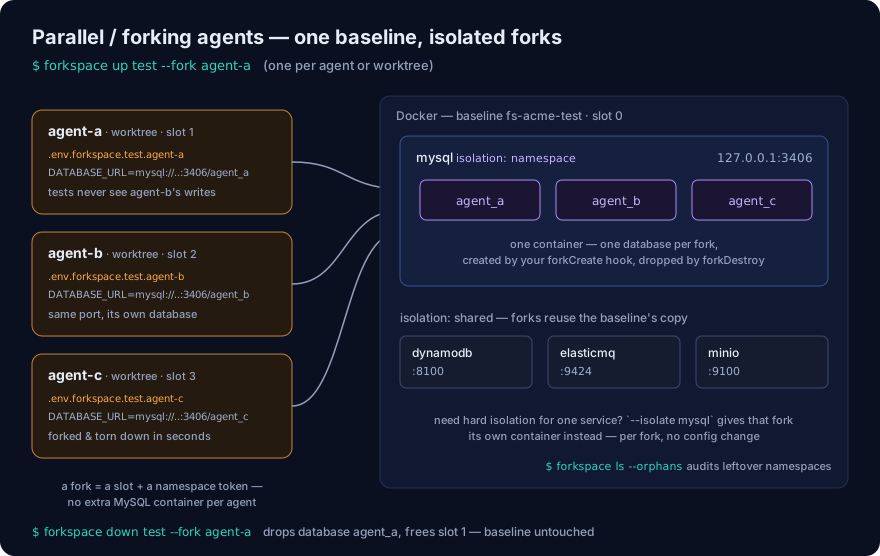
up test --fork <name> gets a slot, env file, and MySQL database inside one baseline container.Worktrees isolate agents’ files; forkspace isolates their state. Each agent runs
up test --fork <name> and gets its own slot, env file, and MySQL database
inside the one baseline container — no per-agent MySQL, no corrupted feedback
loops.
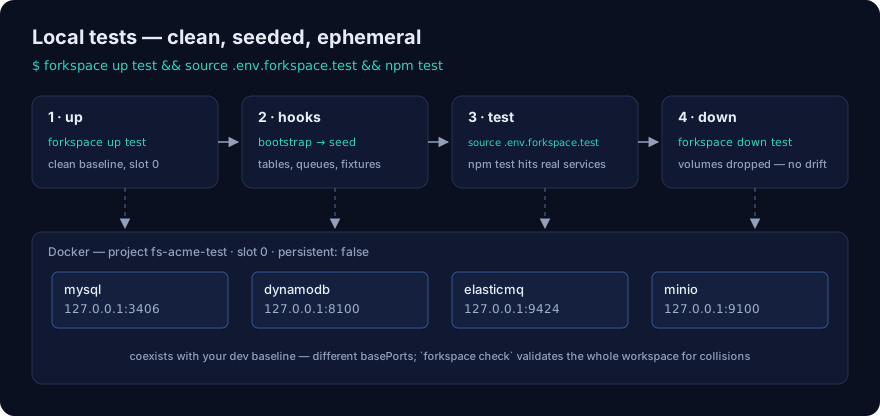
up runs bootstrap → seed; down drops volumes. Coexists with the dev baseline — check proves the port math.A clean, seeded, ephemeral stack on its own ports. up runs
bootstrap → seed, tests source the env file, and down drops the volumes so
no state drifts between runs. The test baseline coexists with your
dev baseline — forkspace check proves the port math workspace-wide.
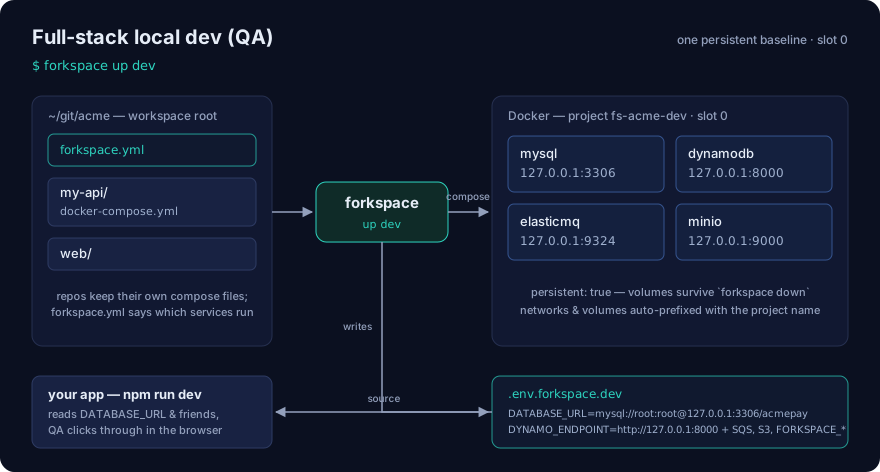
up dev claims services from your repos' compose files, writes .env.forkspace.dev, and keeps volumes across down.One persistent baseline for day-to-day work. forkspace up dev starts the
services your forkspace.yml claims from your repos’ compose files, writes
.env.forkspace.dev, and your app and QA sessions run against it. Volumes
survive down.
Each service in an environment declares an isolation level:
| Level | What the fork gets | When to use |
|---|---|---|
container |
Own compose service instance (container, volumes, host port) | Full data isolation — separate MySQL per fork |
namespace |
Namespace token inside the baseline service (own database, table prefix, …) | Schema/data isolation without extra containers |
shared |
The baseline service as-is | DynamoDB, queues, object storage that don’t need per-fork copies |
Typical test setup: MySQL is namespace, everything else is shared. One
baseline MySQL; each --fork gets its own database name derived from the fork
name.
services:
  mysql:
    isolation: namespace
    exports:
      DATABASE_URL: "mysql://root:root@{host}:{port}/{ns}"
  dynamodb:
    isolation: shared
    exports:
      DYNAMO_ENDPOINT: "http://{host}:{port}"
forkspace is the naming authority, not a database driver. It mints the
namespace token ({ns}, FORKSPACE_NS), exposes export templates, and calls
lifecycle hooks. Engine-specific create/drop/list logic lives in your repo
scripts.
An interactive browser playground simulates forkspace without Docker — terminal,
guided scenarios, command panel, and a live forkspace.yml editor.
Try it · full command reference, hooks, and env contract live in the GitHub README.